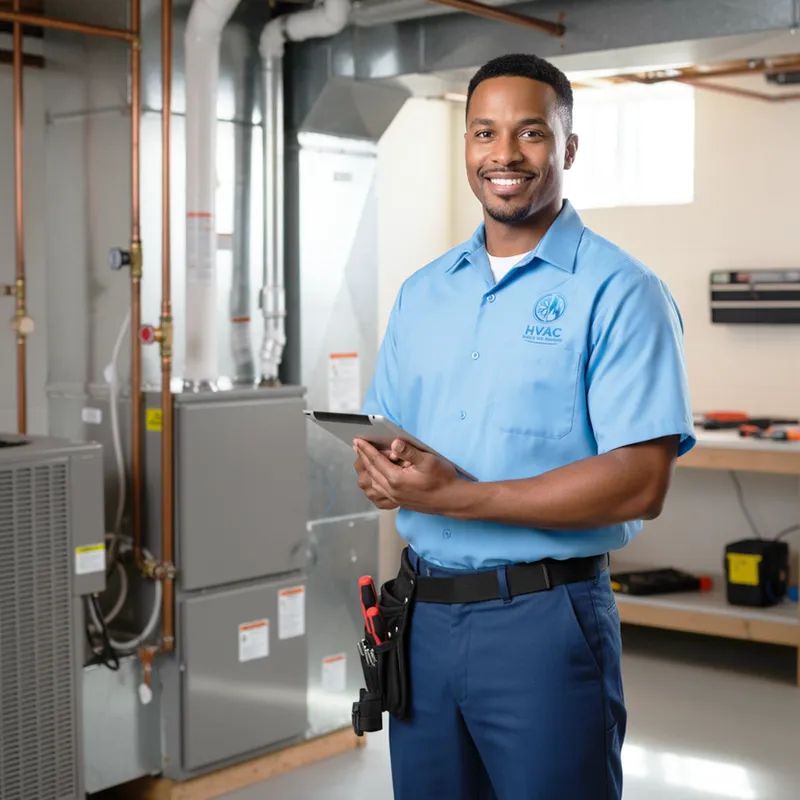
If there's one piece of HVAC maintenance advice that virtually every certified technician and industry organization agrees on, it's this: your heating and cooling system should be professionally serviced twice per year. The optimal timing is a cooling system tune-up in the spring — ideally March or April — and a heating system tune-up in the fall, typically September or October. This schedule ensures both halves of your HVAC system receive attention before the seasons when they're needed most.
The reasoning behind bi-annual service is straightforward. Your HVAC system has two distinct operating cycles: cooling season (spring through fall) and heating season (fall through spring). Each cycle places specific wear patterns on specific components. Servicing before each season allows a technician to identify problems while there's still time to address them before your system is running at full demand — not after it breaks down during a July heat wave or a January cold snap.
What Happens During a Spring HVAC Tune-Up?
A comprehensive spring cooling system tune-up by a NATE-certified technician should include the following components. First, the technician will inspect and clean the evaporator and condenser coils — dirty coils are the single biggest cause of reduced cooling efficiency and can increase energy consumption by 30% or more if left uncleaned. Second, refrigerant levels will be checked and adjusted if necessary — a system running low on refrigerant works harder, cools less effectively, and can damage the compressor. Third, the electrical components will be tested, including the capacitor and contactor, which are the most common failure points during summer heat. Fourth, the condensate drain will be cleared to prevent water damage and mold growth. Fifth, the blower motor, belts, and bearings will be inspected and lubricated as needed.
What Happens During a Fall Heating System Tune-Up?
A fall heating tune-up focuses on your furnace or heat pump, ensuring it's ready for sustained cold-weather operation. For gas furnaces, the critical safety item is a thorough heat exchanger inspection — a cracked heat exchanger can allow carbon monoxide to enter your living space, a potentially fatal situation. The burners will be cleaned and adjusted for proper combustion, the flue system will be inspected for obstructions or leaks, and the blower motor and filter will be serviced. For heat pumps, the technician will inspect and test the defrost cycle, check refrigerant levels, and verify the auxiliary heating strips are functioning properly for extreme cold backup.
The Financial Case for Regular Maintenance
The financial argument for bi-annual HVAC maintenance is compelling. Studies from the Air Conditioning Contractors of America (ACCA) and the U.S. Department of Energy consistently show that well-maintained HVAC systems use 15-25% less energy than poorly maintained ones. On a typical American home spending $1,500-2,500 per year on heating and cooling, this represents $225-625 in annual savings — easily covering the cost of two professional tune-ups. Additionally, systems that receive regular maintenance last an average of 5 years longer than neglected systems. With replacement costs of $5,000-12,000 or more for a complete system, extending lifespan by even two or three years provides thousands in deferred capital expense.
Signs You May Need More Frequent Service
While twice-annual service is the standard recommendation, some situations call for more frequent attention. Homes with pets, particularly dogs and cats that shed heavily, may benefit from quarterly filter changes and more frequent coil inspections. Homes in regions with particularly harsh climate conditions — extreme heat like Phoenix or Las Vegas, or severe cold like Chicago or Milwaukee — place higher demands on equipment and may benefit from more frequent professional checkups. Older systems (10+ years) operating near the end of their design lifespan also warrant more attentive monitoring. Finally, any system that has experienced recurring problems or unusual behavior should be inspected proactively rather than waiting for the scheduled bi-annual service.
DIY Maintenance Between Professional Service Visits
Professional tune-ups are essential, but homeowner maintenance between visits also matters significantly. The most important DIY task is changing your air filter every 1-3 months depending on filter type and household conditions. A clogged filter is the single most common cause of HVAC problems and significantly reduces both efficiency and equipment life. Additionally, keep the outdoor condenser unit clear of debris — grass clippings, leaves, and other vegetation that accumulates around the unit restricts airflow and reduces performance. Check condensate drain lines monthly during cooling season and ensure all supply and return vents in your home are unobstructed by furniture or rugs.
The bottom line: schedule your HVAC maintenance in spring and fall each year. The investment is modest, the savings are substantial, and the peace of mind knowing your system is ready for whatever the weather brings is priceless. Contact HVAC Near Me Repair at (888) 392-7512 to set up your maintenance plan today.
Need Expert HVAC Help?
Our NATE-certified technicians are available 24/7 for repair, installation, and maintenance across the United States.
Call (888) 392-7512 Schedule Service